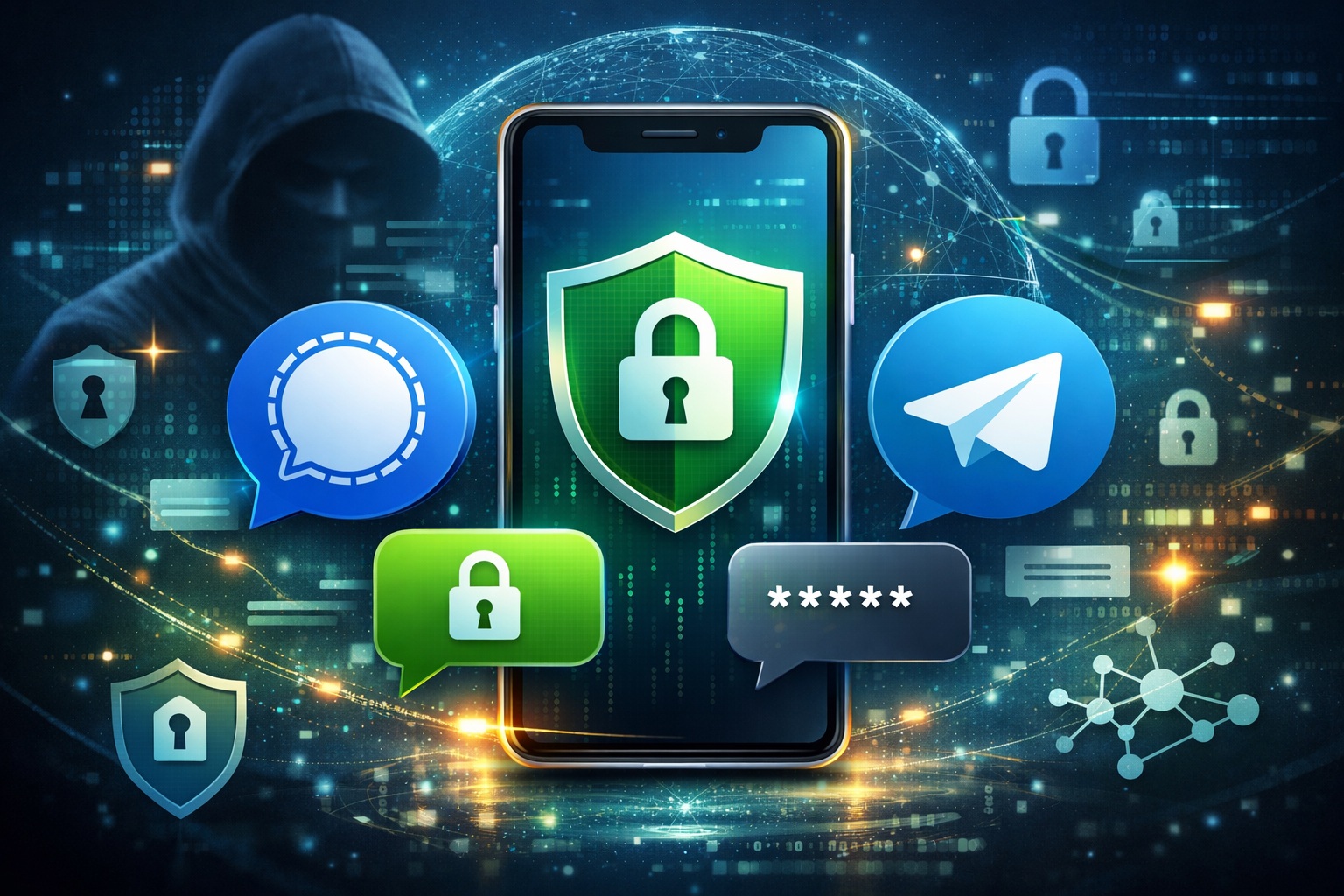
In an era where digital communication dominates daily life, protecting personal conversations has become increasingly important. From journalists and businesses to everyday users, many people are turning to encrypted messaging apps to safeguard their data and privacy.
But not all messaging apps offer the same level of security. Some provide strong end-to-end encryption (E2EE), while others still collect metadata or require identity verification such as phone numbers.
This guide compares the most secure encrypted messaging apps in 2026, highlighting their security architecture, privacy protections, and best use cases.
What Is an Encrypted Messaging App?
An encrypted messaging app protects messages by converting them into unreadable data during transmission.
The most secure systems use end-to-end encryption (E2EE). This means:
-
Messages are encrypted on the sender’s device
-
Only the recipient can decrypt them
-
Even the service provider cannot read the content
However, encryption alone does not guarantee full privacy. Many services still collect metadata, such as:
-
Who you communicate with
-
When messages are sent
-
Device and location information
For true privacy, a messaging platform must minimize both message access and metadata collection.
Top Encrypted Messaging Apps (Security Ranking)
Below is a security-focused comparison of popular encrypted communication apps.
1. SimpleX Chat – Highest Privacy Protection
SimpleX Chat is considered one of the most private messaging platforms available.
Key features:
-
No user accounts
-
No phone number or email required
-
No global user IDs
-
End-to-end encrypted messaging
Instead of identifying users through accounts, SimpleX uses temporary message queues for communication. This design prevents servers from knowing who is talking to whom.
Pros:
-
Extremely strong privacy model
-
Minimal metadata exposure
Cons:
-
Smaller user base
-
Newer ecosystem
Best for: users who want maximum anonymity.
2. Mobilink – Anonymous and Decentralized Messaging
Mobilink focuses on anonymity and metadata protection.
Key features:
-
Decentralized network
- End-to-end encrypted messaging
-
No user accounts
- No phone number or email required
Mobilink routes messages through multiple nodes to hide the sender’s IP address.
Pros:
-
Strong anonymity
-
Metadata protection
Cons:
-
Limited features
-
Smaller network compared to mainstream apps
Best for: privacy advocates and anonymous communication.
3. Briar – Peer-to-Peer Secure Communication
Briar is designed for situations where internet access may be restricted.
Key features:
-
Peer-to-peer messaging
-
Works through Tor, Bluetooth, or Wi-Fi Direct
-
No central servers
Because Briar does not rely on centralized infrastructure, it can function even during network shutdowns.
Pros:
-
Highly resistant to censorship
-
No central data storage
Cons:
-
Limited features
-
Android-only
Best for: activists, journalists, and high-risk environments.
4. Signal – The Gold Standard for Secure Messaging
Signal is widely regarded as the most secure mainstream messaging app.
Key features:
-
End-to-end encryption by default
-
Uses the Signal Protocol
-
Open-source code
-
Disappearing messages
Signal’s encryption technology is also used by other apps such as WhatsApp.
Pros:
-
Highly trusted security model
-
Strong encryption implementation
Cons:
-
Requires a phone number for registration
-
Some metadata still exists
Best for: everyday secure communication.
5. Threema – Privacy-Focused European Messaging App
Threema is a Swiss messaging platform known for strong privacy protection.
Key features:
-
Anonymous user IDs
-
No phone number required
-
End-to-end encryption
Swiss privacy laws provide additional legal protection for user data.
Pros:
-
Strong privacy policies
-
Minimal metadata collection
Cons:
-
Paid app
-
Smaller user community
Best for: privacy-conscious users in Europe and businesses.
6. Wire – Secure Communication for Teams
Wire is designed for secure collaboration and enterprise communication.
Key features:
-
End-to-end encrypted messaging
-
Secure voice and video calls
-
Team collaboration tools
Pros:
-
Enterprise-grade security
-
GDPR compliance
Cons:
-
Limited features in free plans
Best for: secure team communication.
7. Matrix / Element – Open Communication Protocol
Matrix is not just an app but a decentralized communication protocol.
Key features:
-
Open-source ecosystem
-
Self-hosted servers
-
End-to-end encryption support
Pros:
-
Highly customizable
-
Full infrastructure control
Cons:
-
More complex setup
-
Security depends on server configuration
Best for: developers and organizations wanting full control.
8. WhatsApp – Most Popular Encrypted Messaging App
WhatsApp has billions of users worldwide and supports end-to-end encryption.
Key features:
-
Uses Signal Protocol
-
Encrypted messaging and calls
Pros:
-
Massive global user base
-
Easy to use
Cons:
-
Owned by Meta
-
Collects significant metadata
Best for: convenient encrypted messaging with mainstream adoption.
9. Telegram – Powerful Social Messaging Platform
Telegram offers strong features but a different security model.
Key features:
-
Large groups and channels
-
Bot ecosystem
-
Optional end-to-end encrypted “Secret Chats”
However, standard Telegram chats use server-side encryption rather than full end-to-end encryption.
Pros:
-
Powerful community tools
-
Fast messaging infrastructure
Cons:
-
Default chats are not end-to-end encrypted
Best for: large communities and media distribution.
Key Factors When Choosing a Secure Messaging App
When evaluating encrypted messaging platforms, consider these five factors:
1. End-to-End Encryption
Ensures message content cannot be read by servers.
2. Metadata Protection
Limits exposure of communication patterns.
3. Identity Requirements
Apps requiring phone numbers reveal more user information.
4. Network Architecture
Decentralized networks can reduce surveillance risks.
5. Open-Source Transparency
Public code allows independent security audits.
The Hidden Privacy Risk: Metadata
Even if messages are encrypted, metadata may still reveal sensitive information.
For example:
-
who communicates with whom
-
when messages are sent
-
frequency of communication
This information can be used to build social relationship graphs, which may be more revealing than message content itself.
Apps like SimpleX and Mobilink focus heavily on reducing metadata exposure.
Final Thoughts
Secure messaging is no longer just for security professionals. As digital privacy becomes a global concern, encrypted messaging apps are becoming essential tools for everyday communication.
If privacy is your top priority:
-
SimpleX or Mobilink offer the strongest anonymity.
If you want a balance between usability and security:
-
Signal remains the most trusted choice.
And for convenience with widespread adoption:
-
WhatsApp is still the most widely used encrypted messaging platform.
Choosing the right messaging app ultimately depends on your privacy needs, threat model, and communication habits.