1. The Data Storage Challenge in the Mobile Era
Smartphones have become the central hub of personal digital life. Photos, documents, messages, work files, and identity information are now concentrated on a single device that we carry everywhere.
For years, the dominant solution to protect this data has been based on a Cloud-First model:
-
Data is uploaded to cloud servers
-
Backups and synchronization rely on user accounts
-
Access is managed through online platforms
While convenient, this approach introduces several fundamental issues:
-
Personal data must leave the user’s device
-
Security depends on trust in third-party providers
-
Account breaches can expose everything at once
-
Continuous network connectivity is required
-
Legal and compliance uncertainties may arise
As privacy awareness grows, an alternative philosophy is gaining attention:
The Physical-First / Local-First approach to data protection
2. What Is Physical-First?
2.1 Concept Overview
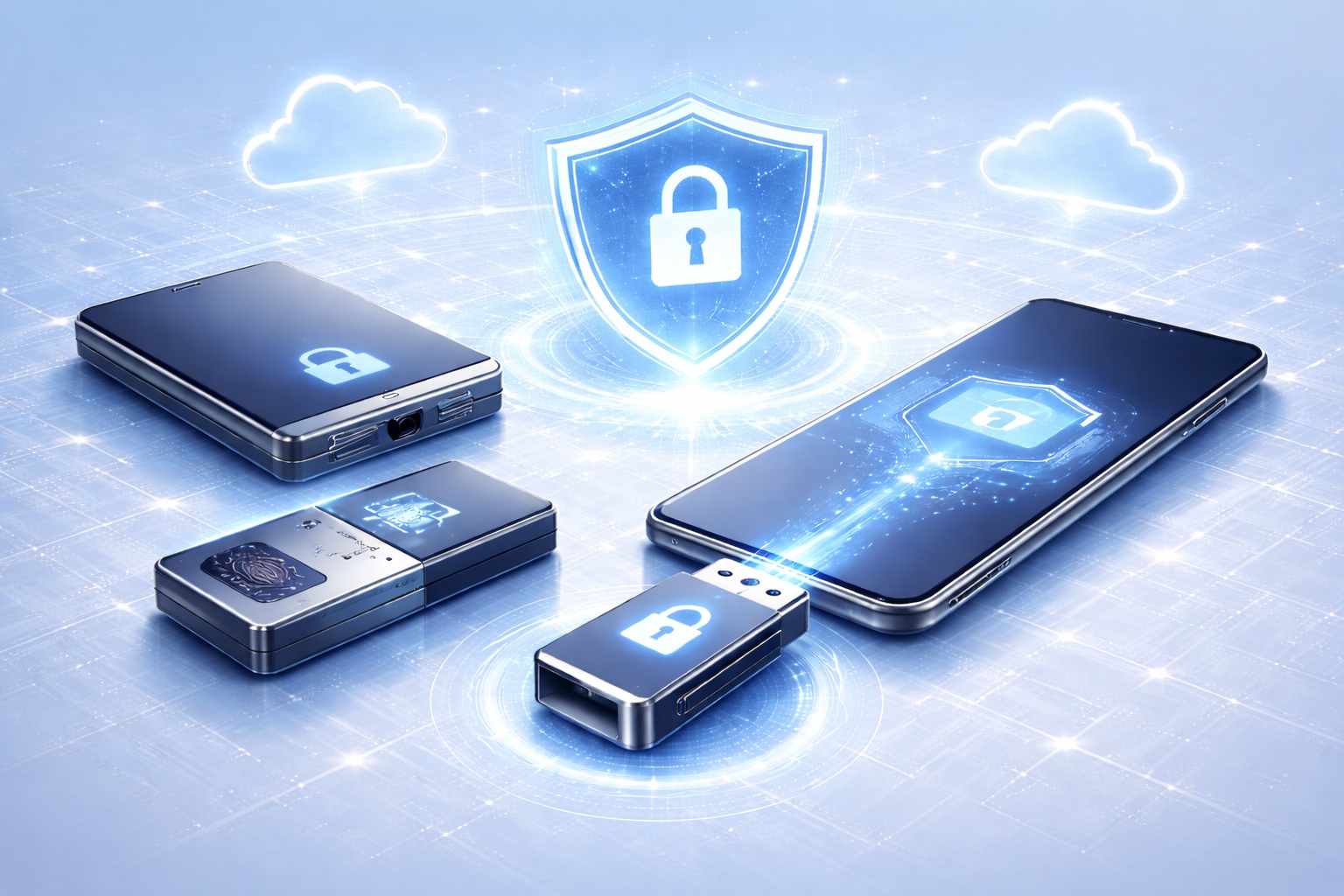
Physical-First is a data security methodology that places local devices and physical storage media at the center of data protection.
Its core principles include:
-
Data is stored primarily on user-controlled physical devices
-
Encryption and processing occur locally
-
Cloud storage is optional rather than mandatory
-
Networks are used only when necessary
Closely related to the Local-First philosophy, Physical-First applies this mindset specifically to data security:
Software and data should be designed for local ownership first, not for cloud dependency.
2.2 Typical Workflow
In a Physical-First system, data usually follows this path:
Key characteristics:
-
Plaintext data never leaves the device
-
Encryption keys remain under user control
-
Backup media is physically owned by the user
-
No mandatory account or server infrastructure
3. Cloud-First vs. Physical-First: Key Differences
| Dimension | Cloud-First | Physical-First |
|---|---|---|
| Primary storage | Cloud servers | User’s physical media |
| Trust model | Platform-centric | User-centric |
| Network dependency | Required | Optional |
| Account system | Mandatory | Optional or none |
| Attack surface | Larger | Smaller |
| Data control | Platform | User |
Cloud-First focuses on accessibility and convenience.
Physical-First focuses on ownership, privacy, and autonomy.
4. When Does Physical-First Make Sense?
This approach is particularly suitable for:
-
High-privacy users
-
Individuals who do not want personal data in the cloud
-
Situations where third-party trust must be minimized
-
-
Offline or restricted environments
-
Areas with unstable or unavailable networks
-
Work scenarios requiring full offline capability
-
-
Data isolation requirements
-
Separation of personal and sensitive information
-
Compliance-driven local storage policies
-
-
Long-term archival
-
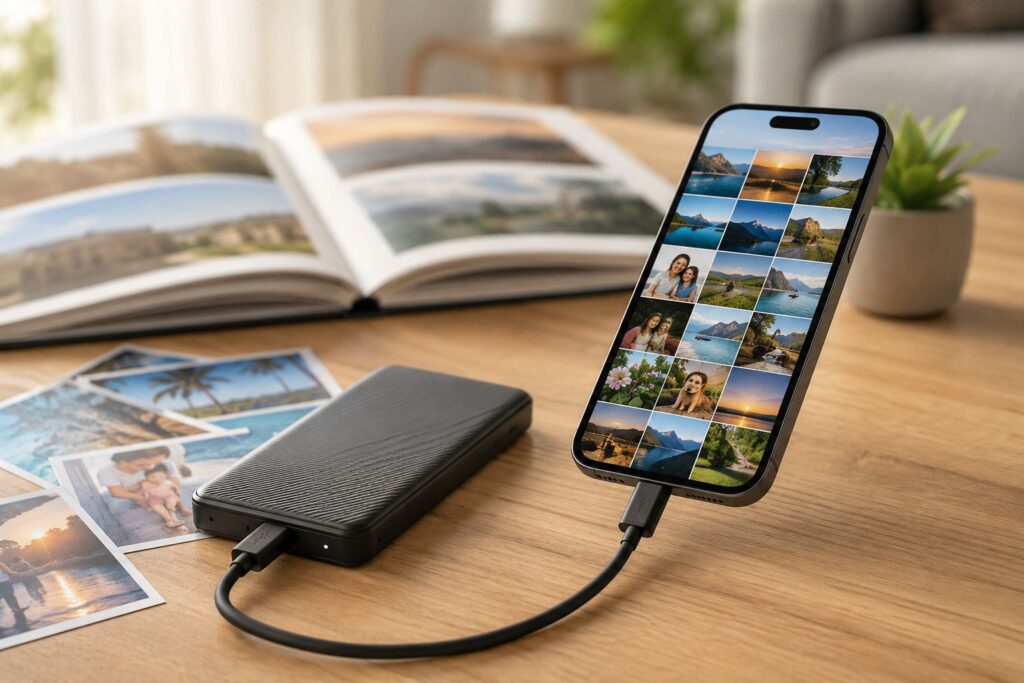
Personal photo collections
-
Important documents that require durable, offline backups
-
5. Product Categories Aligned with Physical-First
Several types of products and tools already implement or closely align with Physical-First principles.
5.1 Mobile Local Encryption Backup Tools
These applications focus on protecting smartphone data without relying on the cloud.
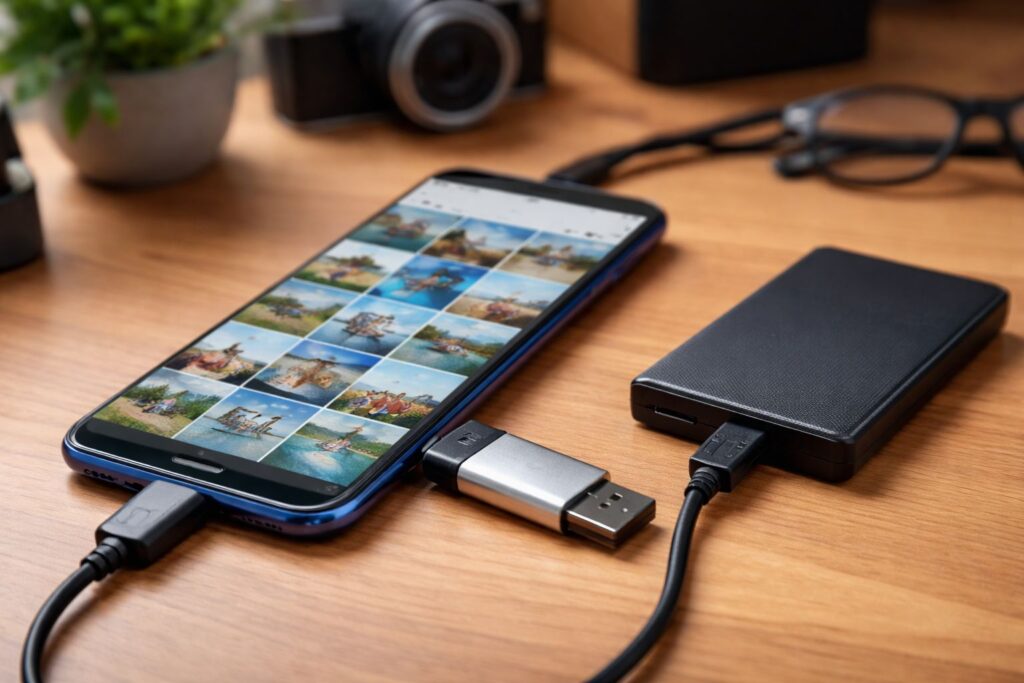
Typical workflow:
-
Connect a USB drive to the phone
-
Encrypt selected data locally
-
Save encrypted files directly to the USB drive
Example Concept:
-
File-level encryption
-
No cloud account required
-
Offline backup and restore
Representative Product:
-
-
A mobile app designed to encrypt smartphone data
-
Saves encrypted backups directly to USB drives
-
Operates without servers or user accounts
-
A practical implementation of Physical-First principles
-
This category essentially replaces “personal cloud storage” with:
A personal, encrypted USB vault.
5.2 Hardware-Encrypted Storage Devices
Another strong embodiment of Physical-First is dedicated secure hardware:
Common examples:
-
Encrypted USB drives
-
Fingerprint-protected storage
-
Hardware password-protected disks
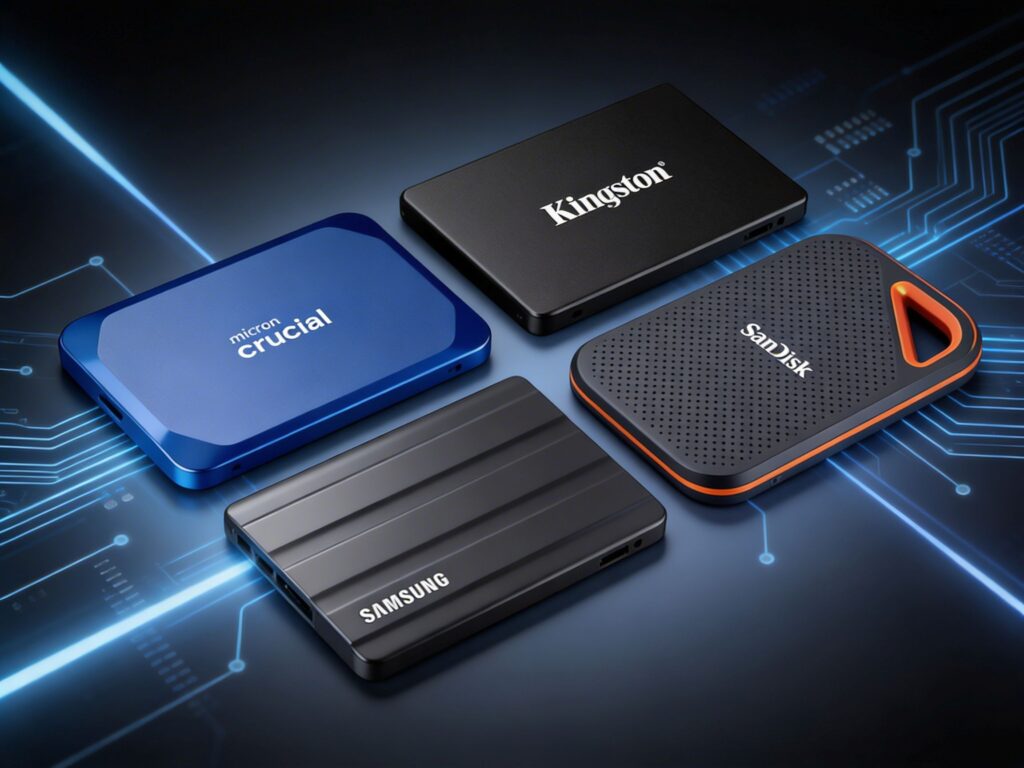
Typical products:
These devices rely on:
-
Hardware-level encryption
-
Physical ownership as the trust boundary
-
Zero dependence on networks
While not smartphone-specific, they follow the same philosophy:
security through user-controlled physical storage.
5.3 Local-First Synchronization Tools
Some tools emphasize direct device-to-device data exchange rather than cloud storage:
Notable examples:
-
Syncthing
-
Open-source peer-to-peer file synchronization
-
No central servers
-
Data transferred directly between devices
-
-
Resilio Sync
-
P2P synchronization based on BitTorrent technology
-
Can operate entirely without cloud services
-
These tools focus more on multi-device synchronization than on USB backup, but they share the Local-First mindset of minimizing cloud dependency.
5.4 Offline Encryption Utilities
General encryption tools also fit into the Physical-First ecosystem:
Examples:
-
VeraCrypt
-
Cryptomator
-
AxCrypt
They allow users to:
-
Create encrypted containers locally
-
Store encrypted data on any physical media
Although more technical, these tools reflect the same principle:
Encrypt locally, store physically.
6. Benefits and Limitations
6.1 Advantages
-
Minimal attack surface
-
Strong privacy protection
-
No reliance on service providers
-
Fully functional offline
-
Clear data ownership
6.2 Limitations
-
Less convenient for frequent multi-device access
-
Physical media can be lost or damaged
-
Users must manage backups themselves
-
Not designed for online collaboration
Therefore, Physical-First is best suited for:
Scenarios where security and privacy outweigh convenience.
7. Emerging Trends
The future is unlikely to be purely Cloud-First or purely Physical-First.
Instead, a hybrid model is emerging:
-
Everyday collaborative data → Cloud-First
-
Sensitive personal data → Physical-First
Rather than competitors, the two approaches are complementary.
8. Conclusion
Physical-First does not aim to replace cloud services.
It offers an alternative path for situations where privacy, ownership, and control are paramount.
Whether implemented through:
-
Mobile USB encryption tools like Lumin
-
Hardware-encrypted storage
-
Peer-to-peer sync systems
-
Local encryption utilities
all of these solutions reflect the same fundamental idea:
True data security begins with user control, not cloud platforms.
As digital privacy concerns continue to grow, Physical-First will remain a crucial component of the personal data protection landscape.