File sharing has quietly changed over the past decade.
What once meant sending files directly between devices is now often indistinguishable from cloud synchronization, account-based storage, and centralized services.
Local-first file sharing is a response to this shift.
It focuses on where data lives, how it moves, and who remains in control.
This article explains what local-first file sharing actually means, how it differs from cloud-based models, and why the distinction matters in practice.
File Sharing Before the Cloud
Originally, file sharing was simple:
-
Files lived on personal devices
-
Transfers happened directly over local networks or removable media
-
No persistent accounts were required
The sender and receiver were the only parties involved.
As cloud platforms became mainstream, this model changed. File sharing increasingly meant:
-
Uploading files to a remote server
-
Granting access via links or accounts
-
Relying on a third party to store, relay, and manage data
While convenient, this shift introduced new assumptions about trust, availability, and ownership.
What “Local-first” Means in Practice
Local-first file sharing prioritizes local devices as the primary source of truth.
In a local-first model:
-
Files are stored on the user’s own devices by default
-
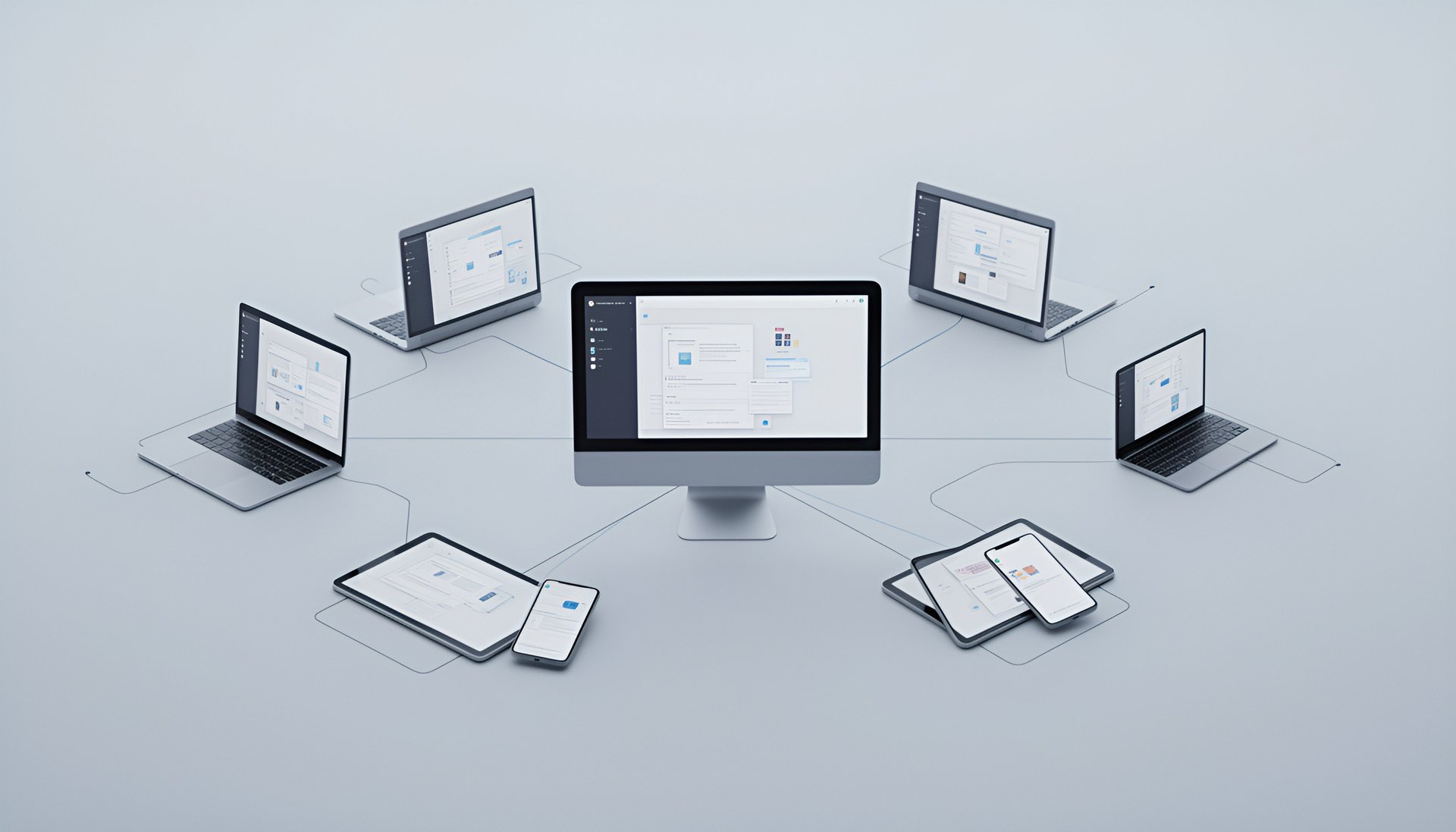
Sharing occurs directly between devices whenever possible
-
Remote infrastructure, if used, acts only as a temporary relay—not long-term storage
The key idea is not avoiding networks entirely, but avoiding unnecessary centralization.
Local-first does not mean offline-only.
It means that online connectivity does not imply surrendering control.
Local-first vs Cloud-based File Sharing
The difference between local-first and cloud-based sharing is structural, not cosmetic.
Cloud-based sharing typically assumes:
-
Central servers store copies of files
-
User accounts mediate access
-
Availability depends on service uptime and policies
Local-first sharing assumes:
-
Files originate and remain on user devices
-
Access is granted device-to-device
-
Infrastructure assists transmission, not ownership
These assumptions affect more than architecture. They shape privacy expectations, failure modes, and long-term data access.
Why Local-first Is Not the Same as Offline-first
Local-first is often confused with offline-first, but the two are not identical.
-
Offline-first focuses on application usability without connectivity
-
Local-first focuses on data control regardless of connectivity
A system can be online and still local-first if it avoids persistent server storage and account dependency.
This distinction matters because many modern tools work offline temporarily while still relying on centralized backends once connectivity returns.
Trade-offs and Limitations
Local-first file sharing is not a universal solution.
Common trade-offs include:
-
Reduced convenience for large, distributed teams
-
Greater responsibility on users for availability and backups
-
More complex networking in some environments
Cloud-based systems often excel at global accessibility and long-term persistence.
Local-first systems prioritize autonomy and minimal trust.
Choosing between them is not about “better” or “worse,” but about which risks and responsibilities are acceptable.
When Local-first Makes Sense
Local-first file sharing is particularly relevant when:
-
Files are sensitive or personal
-
Sharing occurs between known devices or individuals
-
Temporary access is preferred over permanent storage
-
Long-term dependency on a third party is undesirable
In these scenarios, minimizing intermediaries reduces both exposure and complexity.
How This Fits Into the Bigger Picture
Local-first file sharing is one part of a broader shift toward user-controlled storage and communication.
To understand how it connects with private storage, NAS systems, and hybrid workflows, see the broader guide:
→ Local-first File Sharing & Private Storage: A Practical Guide
That guide expands this foundation into real-world architectures and comparisons.
Summary
Local-first file sharing is defined less by specific tools and more by principles:
-
Data originates on user devices
-
Transfers favor direct connections
-
Central services assist—but do not own—the data
As file sharing continues to evolve, understanding these principles helps clarify what is gained—and what is given up—when convenience replaces control.